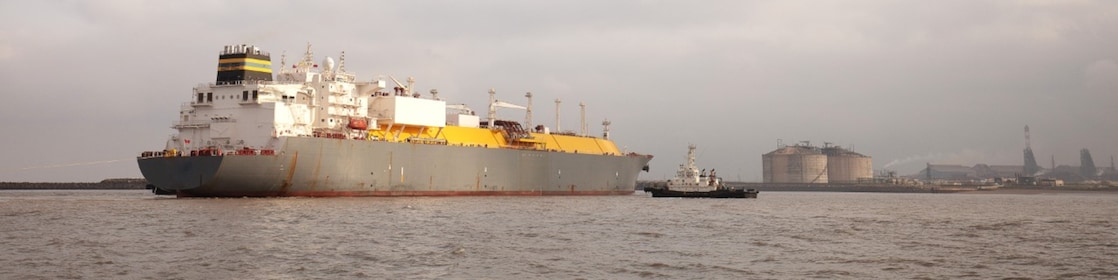
Hazira Port PVT LTD
The first all-weather LNG led multi-cargo port in India is located on the west coast of India and is approximately 25 km from Surat city and 250 km from Mumbai.
Strategic location
The port has a great potential to serve as a 'Gateway Port' catering to diversified industry clusters in the hinterlands of North, West and Central India. These hinterlands together contribute about 65% of country’s containerized traffic.
Port location is strategic. Major industrial clusters are located within 200km reach of the port, in the Vadodara-Ankleswar-Hazira-Vapi belt. This industrially vibrant belt has the honor of being the largest industrial cluster in India. In addition, at least 12 Special Economic Zones (SEZs) fall in the Vadodara-Hazira belt, resulting in escalation of demand for container port facilities.
The port also falls well within the planned Delhi Mumbai Industrial Corridor (DMIC) and the industries within Vadodara-Vapi.
The Hazira Port Pvt. Ltd. is strategically located on the country’s transport infrastructure arterial network- just 25 km away from Delhi-Mumbai mainline rail route and about 40km distant from National Highway (NH-8).
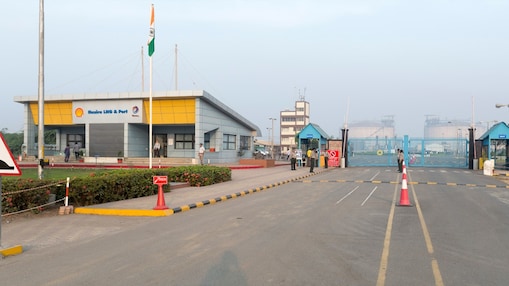
Port Design and Connectivity
Current facilities
Designed as a deep-water, all-weather direct-berthing multi-cargo port, the Hazira Port Pvt. Ltd. has been built with a protected harbor design, with 2 breakwaters and an additional waterfront being used by non-LNG cargo handling facilities.
Read more about current facilities
Read more about current facilities
The fully functional port with a short approach channel of ~1km and draft of ~12m includes LNG jetty with an LNG storage and re-gasification terminal. Operational since April 2005 with an investment of about USD 700 million (over Rs. 3,000 crore), Shell Energy India Pvt Ltd (formerly Hazira LNG Pvt Ltd) & Hazira Port Pvt Ltd is among the largest international greenfield investments in India.
Adani Hazira Port Pvt. Ltd. has additionally developed two container jetties and four Multipurpose jetties in the non-LNG Port area.
For details of non- LNG port services, please visit www.adanihaziraport.com
Future development
The Hazira Port Pvt. Ltd. has adequate water front and large port-backup area, with ample land for yards and an integrated logistics park, sufficient for development of several non-LNG cargo terminals and in particular container cargo terminals.
Read more about future development
Read more about future development
Other planned facilities are Liquid Terminal (for clean oils, chemicals), RoRo Car Carrier Terminal, General Cargo terminals, Shipyard & services for Offshore Exploration industry.
Rail & Road Connectivity
The Hazira Port Pvt. Ltd. is linked to both NH-6 and NH-8 (part of Golden Quadrilateral road network) connecting to the arterial National Highway between Delhi & Mumbai and traverses further to Central India.
Read more about rail & road connectivity
Read more about rail & road connectivity
To further improve road logistics, the government is planning 6-lane widening of the existing roads between port and the national and state highways.
A number of infrastructure initiatives are strengthening the Port linkages to key industrial and export hubs. The Gujarat Industrial Development Board (GIDB) has envisaged a multi-modal transport corridor from Hazira Port Pvt. Ltd. connecting to rail and road trunk routes. The Rail Vikas Nigam Limited (RVNL), Industries, Roads and other Departments as well as Gujarat Maritime Board of the Government of Gujarat have progressed planning of the proposed rail and road corridors. Indian Railways also plans to connect the port to the proposed Delhi-Mumbai Dedicated Freight Corridor (DFC) with a spur line of about 35km. This future linkage will enhance port’s connectivity.
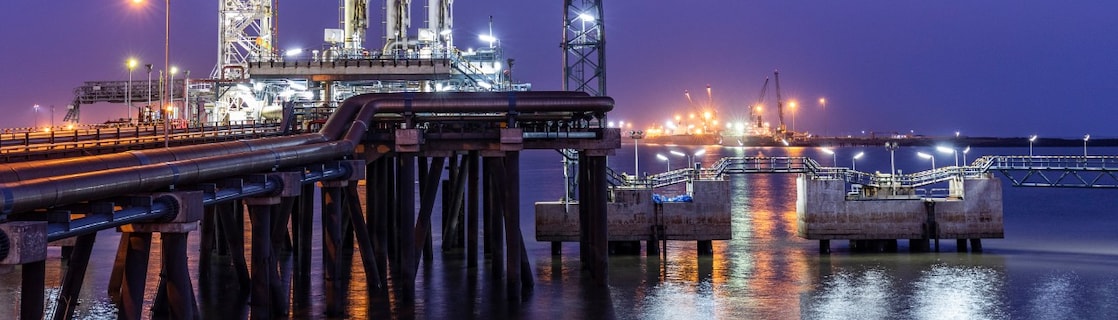
Information for ships
Vessel communication
Pollution & environment
Information for ships
Detailed localised information for arriving ship masters/operators. This information does not replace the advice provided in the Admiralty Sailing Directions for this area.
Conditions of Use
Details of the 'Conditions of Use' (COU) that are applicable for all incoming LNG vessels.
Please note that the COU document needs to be accepted and signed by the Master of all incoming vessels prior to entering the Port.
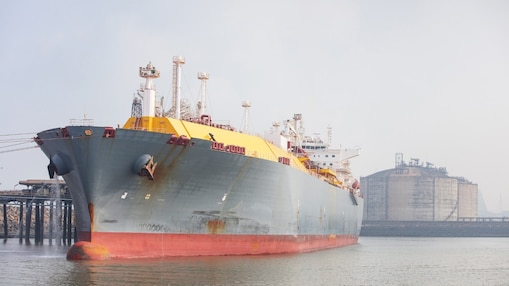
Vessel communication
View the mandatory communication protocol and documentation requirements prior to vessel call at Hazira.
Messages
Messages
Communication requirement from vessels prior calling Hazira.
General
To assist in planning and to satisfy contractual obligations, apart from the PANS, the following pre-arrival messages are to be sent both to Hazira Port Control and the LNG Terminal. Messages should also be copied to the ship’s agent. Should there be any changes to the foregoing which might have an impact on ETA’s, the vessels performance or cargo equipment then both Hazira Port Control and LNG Terminal are to be advised immediately. As per latest DG (Shipping) requirements, PANS also to be sent to the Indian Coast Guard
All communication shall be sent by facsimile and E-mail addressed to:
The Hazira Port Control
Fax no. +91 261 3051158,
Tel. no. +91 261 3051165
E-mail: hlpl-haz-portcontrol@shell.com
On Departure from Load Port
AA Ship’s name and call sign
BB Departure date and time
CC Advise ETA and arrival draught at Hazira.
DD Bill of Lading details and other cargo info
EE Boil off rate
FF Estimated time for discharge
GG Any known deficiencies affecting port performance
During Voyage
If the ETA deviates more than 12 hours from that initially advised on departure and/or there are any changes to DD, EE or FF then Port & Terminal must be advised.
72 Hours prior to arrival
AA Ship’s name and call sign
BB Update ETA
48 Hours Prior to Arrival
AA Ship’s name and call sign
BB ETA and arrival draft
CC Estimated cargo tank temperatures and tank pressure
DD Confirm the following have been tested and/or are fully Operational:
Navigation, mooring, safety & engine systems
Cargo system & boil off control systems.
Gas detection systems
ESD system, alarms and interlocks
Cargo tank high level alarms
High & Low pressure alarms
Remotely operated valves
Cargo lines are free of oxygen
No tank leakages
If the ETA changes by more than 6 hours following the issue of the 96 hours message and before sending the 24 hour message then the revised ETA must be advised to the Port.
24 hours before arrival
AA Ship’s name and call sign
BB Confirm ETA
CC Send pratique message via ship’s agent
If the ETA changes by more than 6 hours following the issue of the 96 hours message and before sending the 24 hours message, then the revised ETA must be advised to the Port.
AA
AA Ship’s name and call sign
BB Confirm ETA
VHF contact with Hazira Port Control
VHF Contact with Hazira Port Control should be established on VHF Channel 16/69 at the earliest opportunity in order to obtain information on berthing, weather and availability of pilot.
Departure Communications
(On dearture from Hazira Port)
AA Ship’s name and call sign
BB Outstanding Port Log items
Communications with VTMS Khambhat:
Attention of Ship Masters and Agents is drawn to the reporting requirements & regulations of VTMS Khambhat as promulgated in the relevant Admiralty List of Radio Stations and www.aatash.com
Attention of Ship Masters and Agents of non-LNG vessels is also drawn to www.adanihaziraport.com for additional information
Documentation
Documentation
Documentation requirement for vessel clearance.
Immigration and Customs
The following documents are required by shore authorities upon arrival for Clearance of the Vessel
1. Customs Authority
- Original Last Port Clearance
- Maritime Declaration of Health
- Vaccination List
- Voyage Memo (Ports called in last 30 days or last 10 ports of call) with arrival and departure dates and security levels)
- Bill of Lading, Cargo Manifest and Transit Cargo if any
- List of Ships Stores Including Bonded Stores and Deck Store
- Personal Effects Declaration with Crew Currency
- Ships Currency Declaration
- Nil Lists (If there are no Passengers, Stowaways, Animals, Arms, Ammunitions)
- List of Narcotic Medicines
- Crew List (Name, Rank, nationality, Passport Number, Seamen book number, Date of and Place, Place of Embarkation)
- Following Statutory Certificates
- Ship Registry Certificate,
- ISPS Certificate
- International Load Line Certificate
- Cargo Ship Safety Equipment Certificate
- Cargo Ship Radio Certificate
- Cargo Ship Safety Construction Certificate
- International Oil Pollution Certificate
- Deratting Exemption Certificate
2. Quarantine Authority
At Hazira, the customs-boarding officer usually gives quarantine (Free Pratique) But if the vessel is coming from Yellow Fever area, Port Health Officer from Kandla will board the vessel.
Following set of documents are required any ways-
- Crew List
- Maritime Declaration of Health
- Vaccination List
- Deratting Certificate
3. Immigration Authority
Custom Authorities carry out the additional charge of clearing the vessel on behalf of Immigration.
For Sign on and Sign off of Foreign Nationals, 48 hours’ notice with confirmed air ticket is required. Ships Agent will have to get Landing permission from the local police.
For Indian Nationals, above is not applicable.
Documents required in case of Crew Change (Foreign or Indian national)
- Crew List
- Personal Effects Declaration
- Sign/Sign off crew passport
4. Port Authority (Hazira Port Pvt Ltd)
Following Documents required by Port Authority (can also be sent electronically) –
- Bill of Lading, Cargo Manifest, Transit Cargo List - 1 Copy
- Crew List - 1 Copy
- Following Statutory Certificates - 1 Copy each
- Ship Registry Certificate,
- ISPS Certificate
- International Load line Certificate
- Cargo Ship Safety Equipment Certificate
- Cargo Ship Radio Certificate
- Cargo Ship Safety Construction Certificate
- International Oil Pollution Certificate
- Derating Exemption Certificate
The following documents are required by the Shell Energy India LNG terminal for Cargo Clearance
- Sale and Purchase Agreement or detailed contracts
Sale and Purchase Agreement or detailed contracts
- Commercial Invoice
- Original Bill of Lading
- Certificate of Origin
- Certificate of Quality
- Certificate of Quantity
- Load Port Ullage Report (Pre and Post Loading)
Last 3 documents will require signature of independent surveyor.
Other documents will be prepared and given by importer in consultation with CHA.
Pollution & Environment
Expectations form each calling vessel with respect to the MARPOL (marine pollution) requirements at the Hazira Port Pvt. Ltd.
Water & air pollution
Advice to Masters in line with International Marpol requirements and International Ballast water convention requirements.
Read more about Sea Water Pollution
Read more about Sea Water Pollution
Advice to Masters in line with International Marpol requirements.
Shell Energy India LNG Terminal and the Hazira Port are situated in a protected coastal mangrove area bordering on protected forestland and pollution of any description, from whatever source, will be viewed extremely seriously and must be reported immediately to the Indian Coast Guard. This is a statutory requirement of the Government of India. All vessels visiting the Hazira Port must be in full compliance with the current MARPOL requirements.
Avoidance of Pollution:
Please also note the following measures, which will assist in avoiding pollution:
No oil or mixture containing oil shall be discharged or allowed to escape from a vessel while at the Hazira Port or within the Hazira Port Limits.
No garbage or other materials, either liquid or solid, shall be discharged overboard from a vessel, but shall be retained in suitable receptacles on board.
Whilst within the Hazira Port Limits the internal transfer of any oil, slops or bunkers on board is prohibited.
In the event of any leakage or spillage of oil or oil contaminated liquids on board, the Loading Master and Terminal Shift Supervisor must be advised immediately in order that discharge operations can be stopped until the spill has been cleaned up.
Absorbent swabs or sawdust used for mopping up such spills shall be collected and removed ashore for disposal.
During the discharge or loading of petroleum products, deck scuppers and drain holes must be suitably plugged. Any excess water that may accumulate must be drained off as required. Drip trays must be placed under manifold connections, and any accumulation of water drained off at regular intervals. During LNG discharge operations scuppers should be closed, however a careful watch should be maintained to ensure that any buildup of water on deck is drained off.
Prior to commencement and at regular intervals throughout discharge, regular checks are to be made to ensure that oil or oily water is not escaping through sea valves. Overboard discharge valves through which oil could escape shall be lashed in the shut position during the vessel’s stay alongside. Where lashing is not practicable a suitable means of marking the valves should be used to clearly indicate that the valves are to remain closed.
Where ballasting is to take place in systems that have previously been used for cargo, sea inlet valves shall not be opened before pump suction has been established.
Unused cargo and bunker connections must be closed and blanked. Blank flanges shall be fully bolted with the gaskets in place and other types of fittings, if used, properly secured.
Read more about Air Pollution
Read more about Air Pollution
Advice to Masters in line with International Marpol requirements.
Company agreements with the Government of Gujarat strictly limit the emission levels of hydrocarbon vapour from the Hazira plant. Although it is recognized in these agreements that some ship operations will involve the emission of hydrocarbon vapour to atmosphere during discharge ships co-operation is requested to ensure that such emissions are kept to the absolute minimum.
Read more about Ballast Water
Read more about Ballast Water
Advice to Masters in line with International Ballast water convention requirements.
There are no ballast reception facilities at Hazira Port therefore all ships must arrive with clean ballast in segregated ballast tanks (SBT). Only clean ballast water from SBT tanks can be discharged overboard, subject to inspection and approval by the Loading Master. All ballast water contained in tanks, not designated as SBT, must be retained on board.
Minimum Ballast water Quality
The Government of India has indicated that it may implement unilaterally the provisions of IMO Draft Regulations for the Control and Management of Ships Ballast Water to minimize the Transfer of Harmful Aquatic Organisms and Pathogens (MEPC 39/7). This will require all ships intending to discharge clean ballast in Indian waters to have carried out a complete change of ballast water at a distance of at least 50 miles from the Indian coastline.
Under IMO Draft Regulation B-4 Ballast Water Exchange, all ships using ballast water exchange should:
Whenever possible, conduct ballast water exchange at least 200 nautical miles from the nearest land and in water at least 200 metre in depth, taking into account Guidelines developed by IMO;
In cases where the ship is unable to conduct ballast water exchange as above, this should be as far from the nearest land as possible, and in all cases at least 50 nautical miles from the nearest land and in water at least 200 metre in depth.
Oil Spill Reponse
Hazira Port Pvt. Ltd’s Oil Spill Response Policy & Capabilities.
Read more about Oil Spill Response
Read more about Oil Spill Response
Hazira Port Pvt. Ltd’s Oil Spill Response Policy & Capabilities.
The Hazira Port Oil Spill Response Plan
The Oil Spill response plan has been prepared as per the directives of the Indian Coast Guard and the Gujarat Pollution Control Board.
In spite of ‘almost zero leak design’ of the terminal facilities and the fact that any spilled LNG will not pollute the marine environment there could be some discharges of fuel oil into the port either from the tugboats operating in the port or from the LNG carrier. In the event of such an occurrence a speedy and appropriate response action is required from the Port Authority with port owned and operated equipment to contain the spill and minimize the environmental damage (Tier-I Response). Secondly the Hazira Port will have to be capable to assist the neighboring Port of Magdalla in case of a significant oil spill in its waters (Magdalla Tier-II Response), thirdly the Hazira Port will have to assist the Indian Coast Guard, when instructed to do so, in case of a major oil spill threatening the Indian Coastline as outlined in the Indian National Oil Spill Contingency Plan (Tier-III Response) and fourthly the Shell Group has organized it’s oil spill response capability in regional Oil Spill Team Resource Networks. For the Middle East and India the network is called OSTRIMESA. Any Shell Business Unit in the region, requiring support to respond to a significant oil-spill incident can request trained manpower assistance from other Shell Business Units in the area. (STASCO-ordinated Group Response)
The Hazira Port Oil Spill Response Plan identifies our spill response organizational structure, responsibilities, communications and procedures to respond to oil spill emergencies.
Objective
The objectives of the Oil Spill Response Plan are as follows:
- Ensure the safety of the personnel in the event of an oil spill
- Minimize the environmental impact of an oil spill
- Protect the shareholders assets
- Minimizing business disruption
- Minimizing risk of damage to the Group’s reputation
- Minimizing harm to the people
The plan is intended to assist in dealing with an accidental discharge of oil. Its primary purpose is to set in motion the necessary actions to stop or minimize the discharge and to mitigate its effects.
The plan guides the HPPL Management, Port Authority, Harbour Master and his Duty Staff through the decisions, which will be required in an incident response. The tables, figures and checklists provide a visible form of information, thus reducing the chance of oversight or error during the early stages of dealing with an emergency situation.
Oil Spill Response Policy
Prevention of accidental spillage is the HPPL’s first priority. All the facilities are designed, installed and operated to minimize possibility of oil spill. Facilities and resources supplied by third parties are also required to meet international pollution prevention design and operation standards.
HPPL shares the community concern for the protection of the natural environment from oil spills. The company is committed to integrate into its plans and operations and to identify oil spill risks.
To achieve this HPPL will,
- Respond immediately to any incident with the objective of protecting human life and to minimize environmental impacts
- Work and consult with appropriate with appropriate government bodies, and the local community to address any issues relating to oil spills in a timely manner
- Provide adequate training and information to enable employees and contractors to adopt environmentally responsible work practices, to be aware of the responsibilities in the prevention and clean up of oil spills
- Develop emergency plans and procedure so that incidents (accidental releases) can be responded to in a timely manner
- Develop and maintain management systems to identify, control and monitor risks and compliance with government regulations and industry guidelines
- Where third party interests are involved, such as products and or chartered vessels, the company will assess the situation and take timely and appropriate action
Each employee is responsible for the implementation of this policy in association with their specific duties, this includes contractors and their employees.
Port tariff
Port charges are levied for the use of the Port facilities and the provision of pilotage and tug services as well as berth hire. Port Charges are payable in advance. Following tariff structure is in force for the Hazira Port Pvt. Ltd.
For LNG ships:
- Port Dues: (Payable on each entry into the port) payable to AHPPL
- Pilotage and Towage Charges: (Payable on each entry into the port) payable to AHPPL
- Berth Hire Charges for LNG berth: USD 0.047/GRT per 8 hours payable to HPPL
The above tariffs are exclusive of any indirect taxes (including Service Tax). If any Indirect tax (including Service Tax) is leviable or assessed to be levied upon HPPL with respect to the above tariffs, the same shall be charged to the LNG ship in addition to the above tariffs.
For LNG ship Port Dues, LNG Pilotage & Towage charges and all non-LNG related tariffs, please refer www.adanihaziraport.com

Agreement with Adani
Details on the agreement with Adani to provide a non-LNG cargo facility at Hazira.
The Adani Group-promoted Mundra Port and Special Economic Zone Ltd (MPSEZL) has signed a sub-concession agreement with Hazira Port Pvt. Ltd. and the State's port sector regulator, Gujarat Maritime Board, for development of a non-LNG cargo facility at Hazira.
The Hazira Port Pvt. Ltd. is the only common user multi-cargo, deep-draft port facility in the south Gujarat region and will be able to handle coal, container, liquid and other cargoes.
With an investment of Rs 2500 crores, the master plan of the port provides 12 berths multi-cargo facilities at the Hazira Port Pvt. Ltd. Presently five berths are operational.
The project will augment the cargo handling capacity on the west coast and offer an alternative port to customers of northern and central India and added to the rapid economic growth of the state of Gujarat and India.
Contact us
Key contacts details for Hazira Port Pvt. Ltd.
Port Manager
Telephone: +91 261 4151301
Harbour Master & PFSO
Telephone: +91 261 4151301
Asst. Harbour Master & Dy.PFSO
Telephone: +912614151302
Hazira Port Pvt. Ltd. Control
Telephone: +91 261 4151165
Fax: +91 261 4151158
E-mail: hlpl-haz-portcontrol@shell.com
Registered Office Address:
Hazira Port Pvt. Ltd.
Office No. 2008, The Address, Westgate - D Block
Nr. YMCA Club, S. G. Highway, Makarba
Ahmedabad, Gujarat
India – 380051
Telephone: +91 79 47554100
Fax: +91 79 47554101
Site/Terminal Office Address
Hazira Port Pvt. Ltd.
Via Surat, Hazira, PIN: 394270, Gujarat - INDIA
Corporate Identity Number (CIN)
Hazira Port Pvt. Ltd.
CIN: U63010GJ2000PTC038781