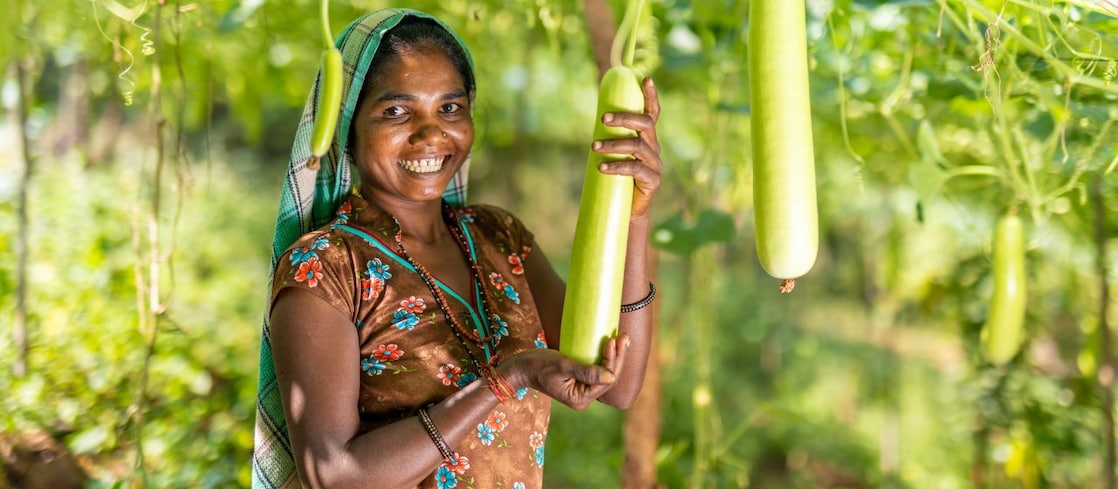
Livelihood
In many rural parts of India, small farmers lack reliable electricity and often depend on costly fuel alternatives for irrigation. Shell's 'Access to Energy Livelihood' Programme tackles this challenge by improving incomes through sustainable agriculture, water resource development, and renewable energy solutions.
Food-Water-Energy Program:
In many parts of rural India, small-scale farmers struggle with limited access to electricity, often relying on more expensive alternatives to pump water for irrigation. Over time this approach has become increasingly challenging, affecting agricultural productivity, water management, and farmers' incomes.
To address this, the Food-Water-Energy program was launched with a clear mission: to improve livelihoods and increase farmers’ income by integrating sustainable agriculture, water resource development, and renewable energy solutions. Built on the principle that holistic rural development requires complementary initiatives, the programme tackles the critical food-water-energy nexus, a key barrier to sustainable livelihoods for farmers.
Shell focuses its social investment efforts in marginal, tribal, and remote agrarian regions, where communities face interconnected challenges such as:
- low agricultural productivity,
- depleting groundwater
- limited access to power for irrigation
- and low capacity to drive change.
These challenges often result in low incomes, poor quality of life, migration, and the degradation of natural resources. Through targeted interventions, Shell aims to help build more sustainable and resilient rural livelihoods.
Key Challenges
Shell partnered with NGO implementation partners to engage directly with farming communities across Gujarat to understand the challenges they face. Through these interactions, three critical needs emerged:
- Water Access: Limited availability of irrigation water for agriculture
- Energy Access: Lack of affordable energy to pump water, even where it was available
- Agricultural Knowledge: Need for guidance, improved farming practices, and access to quality agricultural inputs to enhance crop yields
These insights informed the design of targeted interventions to address the interconnected challenges of water, energy, and agriculture
About the Project/The Solution: Shell developed a phased, integrated solution to address the Food-Water-Energy Nexus through interventions focused on water stewardship, sustainable energy access, and improved agricultural practices.
- Access to Water
- Access to Energy
- Improved Agricultural Practices
This integrated model creates a foundation for long-term resilience and improved livelihoods in rural communities.
Access to Water
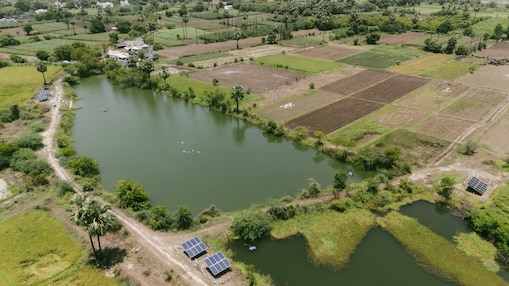
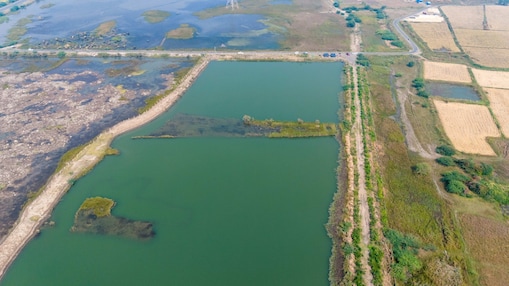
The programme supported the construction of open wells, check dams, and village ponds. Each structure served 10-13 farmers organized into Water User Groups, promoting shared ownership and sustainable water management.
Shell supported the initiative by providing materials for well construction and pipeline installation, while farmers contributed manual labour, ensuring shared ownership.
Water distribution is managed collectively, with members following a rotation system based on irrigation cycles. These schedules are agreed upon by the group, considering factors such as the number of farmers, land under cultivation, and crop types.
Access to Energy
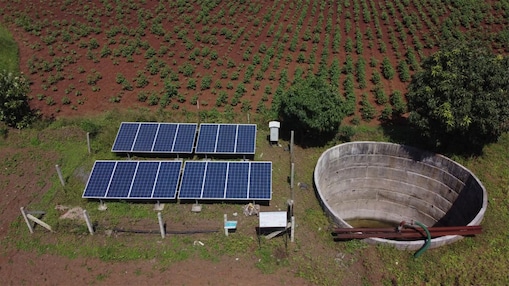
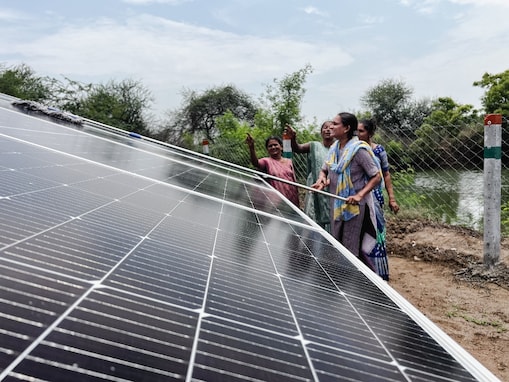
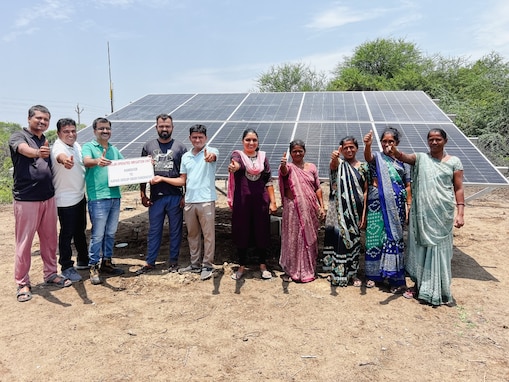
Following the construction of wells, the Food-Water-Energy programme enabled the installation of solar panels and pumps for water lifting and distribution. Shell invested in these assets, while farmer groups took responsibility for their operation and maintenance.
Improved Agricultural Practices
Previously reliant on rain-fed crops, farmers had limited experience with irrigated farming, and to bridge this gap, the project introduced targeted interventions, including:
- Training in irrigation and water management practices
- Sustainable practices such as promoting integrated nutrition and pest management
- Guidance on crop planning and improved package of practices
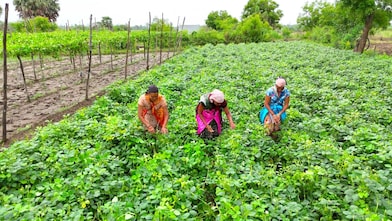
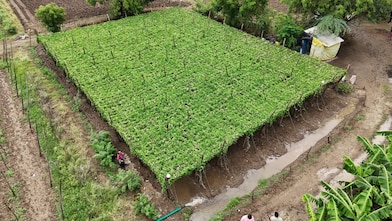
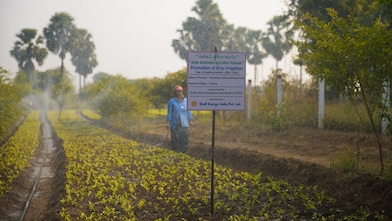
Farmer Field Schools equipped farmers with skills in water conservation, efficient irrigation, crop planning, and sustainable agriculture. The programme also promoted climate-smart farming practices, helping reduce input costs and improve crop quality and yields.
Governance and Community Ownership
Water User Groups (WUGs) were formed across project villages, bringing together 10-13 smallholder farmers to manage water resources, irrigation infrastructure, and asset maintenance. Community ownership was strengthened through voluntary land, cash, and in-kind contributions for the construction of wells, water harvesting structures, and conservation measures, fostering long-term sustainability and accountability.
To ensure the long-term sustainability of the programme, farmer groups established clear guidelines for:
- Managing water resources
- Operating and maintaining solar lift irrigation systems
- Water budgeting and crop planning
- Implementing crop rotation schedules
- Collecting water usage charges to support future maintenance
To foster knowledge sharing, experienced groups mentor new ones, promoting peer learning and replication across communities.
Project highlights and key achievements
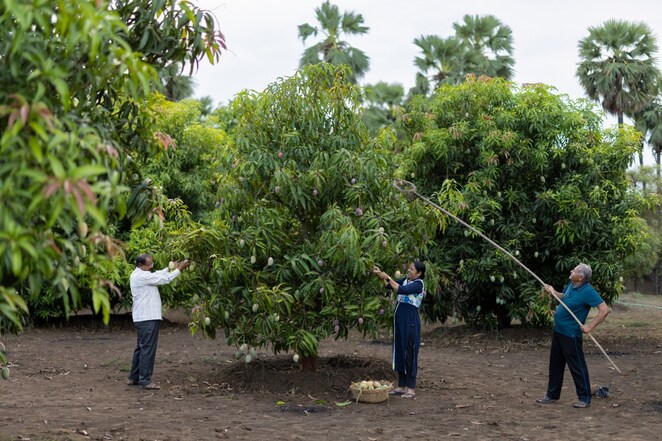
- 241 water resources assets created and farmer user groups formed
- 1492 kW of solar power systems installed
- 20,576 smallholder households benefited
- 3,724 farmers supported for creeper vegetable cultivation and Integrated Pest & Nutrition Management
- 48,757 farmers participated in various capacity-building events
By integrating energy, water, and agricultural support, the programme has significantly improved rural livelihoods and quality of life. Key outcomes include:
- Reduced Distress Migration and Improved Family Well-being: Distress migration declined from 42% to 31% as farmers were able to cultivate multiple crops and build sustainable local livelihoods. This also helped keep families together and supported children's education
- Improved Yield and Income: Better seeds, irrigation, and sustainable farming practices led to a 52% increase in agricultural productivity and a 34% rise in household income.
- Stronger Community Resilience: By promoting collaboration, resource stewardship, and sustainable livelihoods, the initiative is helping build more resilient communities
- SDG Impact: The programme improves water access, agricultural productivity, food security, farm incomes, and livelihood resilience, while supporting women's participation, climate-resilient agriculture, and the inclusion of smallholder farmers and tribal communities. It contributes to SDGs 1, 2, 5, 6, 8, 10, 12, and 13.
Recognition:
- Winner, Shell Powering Progress Awards 2023 (Internal) under the Powering Lives category for Access to Energy Initiatives Powers Livelihoods in India.
- Gujarat State CSR Authority Award for a Sustainable and Impactful CSR Project.
- Runner-Up, Water Sustainability Awards 2025-26 in the category Enhancing Water Management through Community Participation, organized by TERI in partnership with UNDP and supported by the Ministry of Jal Shakti, Government of India.